The bathroom scale is the most common instrument people use to check their weight, “gaining” or “losing” status, but weight alone is a very poor progress indicator. The different-looking couple of 180-pound individuals—the athlete and the couch surfer—is quite simply due to the same factor: body fat percentage.

Knowing your actual body-fat percentage tells you far more than BMI or total weight ever could. It reveals how much of you is lean muscle versus stored fat, helps set realistic goals, and prevents the frustration of “weight loss” that’s actually just lost muscle.
In this post, you’ll learn:
- Why body-fat percentage matters more than weight
- The most accurate (and practical) ways to measure it
- A free, instant body-fat calculator you can use right now
- Healthy ranges for men and women
- How to lower it safely if it’s too high
Why Body-Fat Percentage Beats Scale Weight
- Muscle is denser than fat. Gaining 5 lbs of muscle while losing 5 lbs of fat keeps your weight the same but transforms your physique.
- High body fat (even at a “normal” weight) is linked to higher risks of diabetes, heart disease, and inflammation.
- Low body fat (done healthily) improves hormone profile, energy, confidence, and athletic performance.
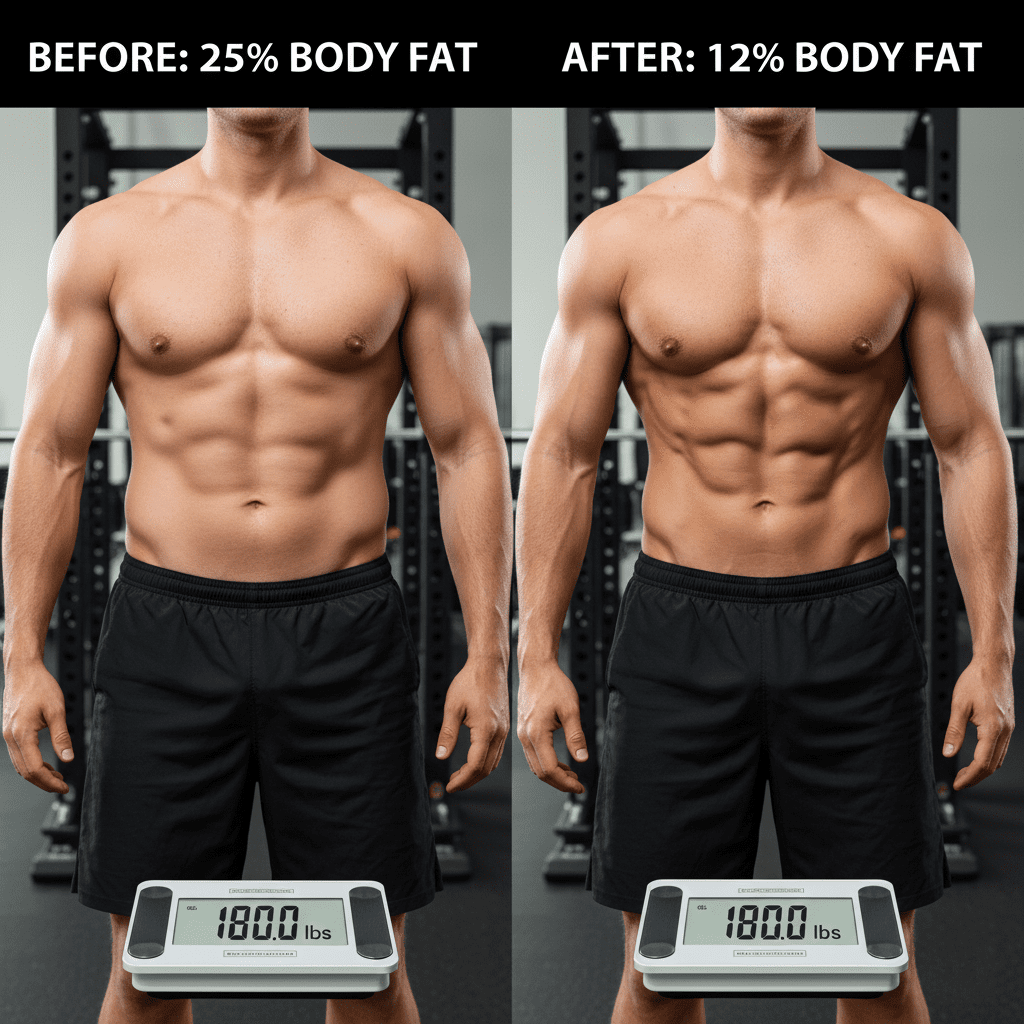
Bottom line: the mirror and your body-fat percentage tell the truth; the scale often lies.
The Most Common (and Accurate) Measurement Methods
| Method | Accuracy | Cost | Convenience | Notes |
|---|---|---|---|---|
| DEXA scan | Gold standard | $75–$250 | Low | Uses X-ray; very precise but expensive |
| Hydrostatic weighing | Excellent | $40–$150 | Low | Underwater weighing; inconvenient |
| Bod Pod (air displacement) | Very good | $25–$75 | Medium | Fast, but clothing/hair can skew results |
| Skinfold calipers (7-site) | Good–Very good | $5–$25 (calipers) | High | Skill-dependent; best with experienced tester |
| High-end bioelectrical impedance scales (InBody, etc.) | Good | $30–$35,000 (device) | Very high | Hydration and meal timing affect accuracy |
| U.S. Navy / YMCA 3-site formula + tape measure | Decent–Good | Free | Extremely high | Surprisingly accurate for most people |
For 95% of people, the free tape-measure methods are accurate enough to track meaningful change over time.
Free Body-Fat Calculator (U.S. Navy Method)
The U.S. Navy formula is one of the most researched field methods and only requires a tape measure and 30 seconds.
For Men:
Measurements needed (in inches or cm—keep units consistent):
- Height
- Neck circumference (below Adam’s apple)
- Waist circumference (at navel level)
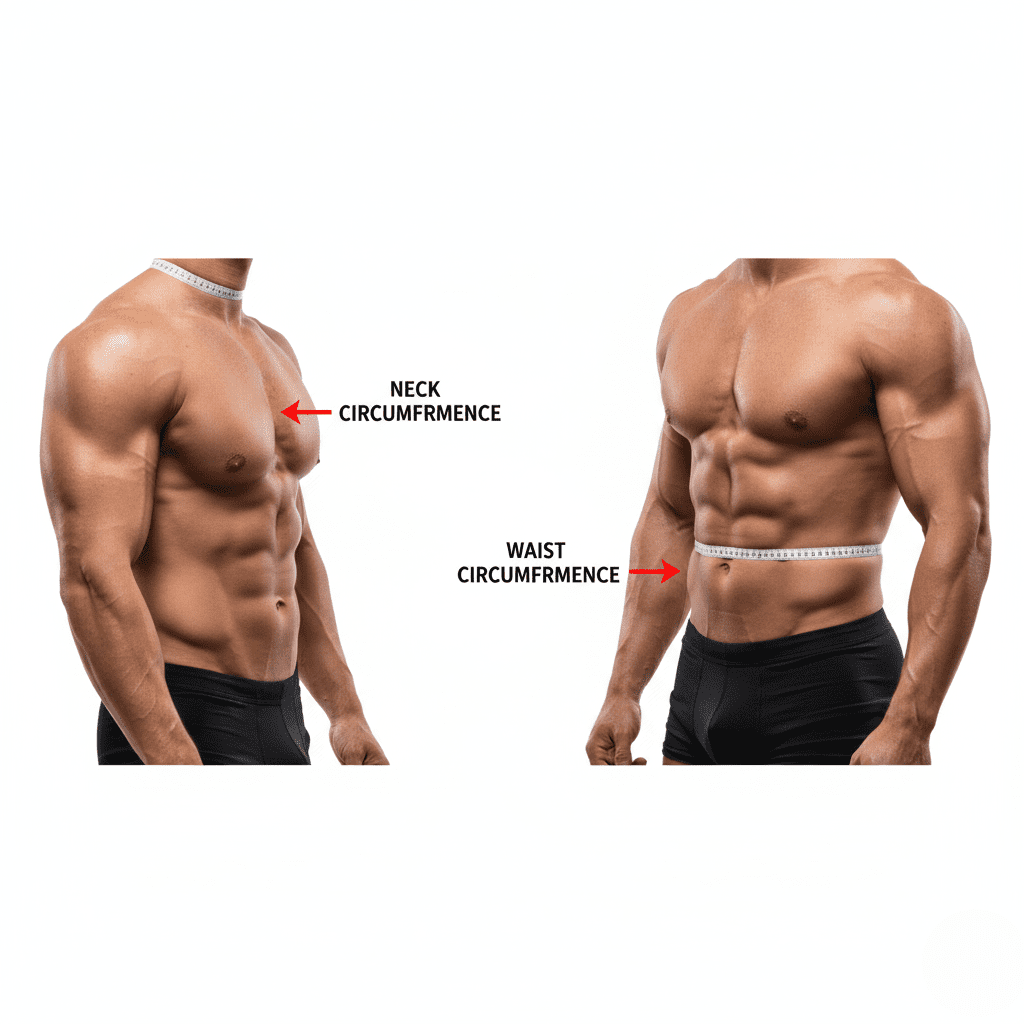
Formula: % body fat = 86.010 × log₁₀(waist − neck) − 70.041 × log₁₀(height) + 36.76
For Women:
Measurements needed:
- Height
- Neck circumference (below larynx)
- Waist (smallest point)
- Hips (widest point)
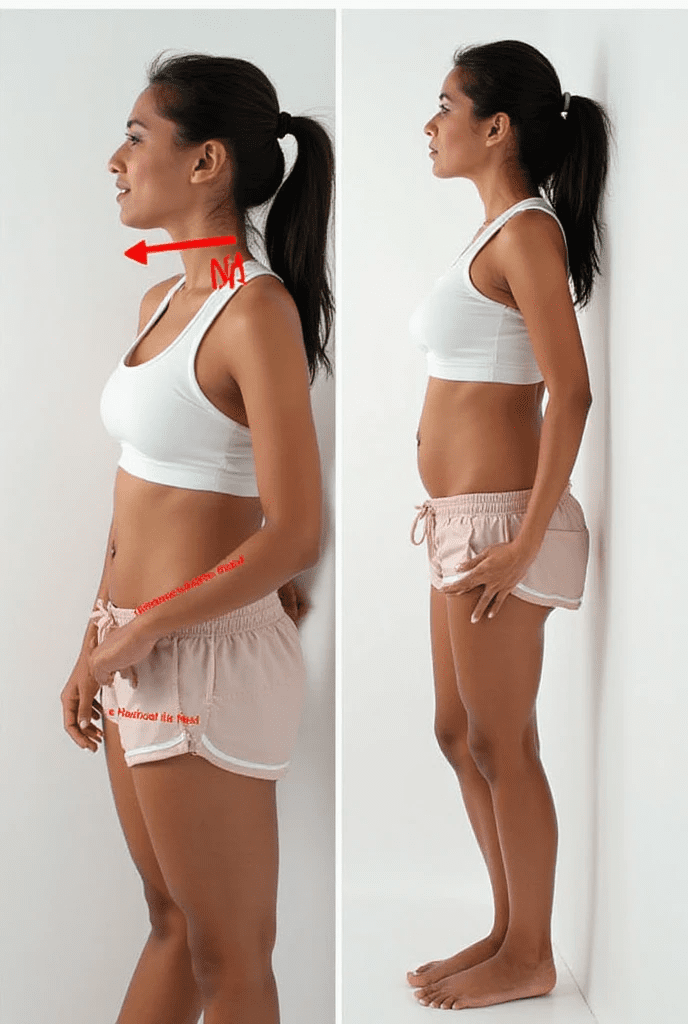
Formula: % body fat = 163.205 × log₁₀(waist + hips − neck) − 97.684 × log₁₀(height) − 78.387
Instant Calculator (Copy-Paste into Browser)
Here’s a ready-to-use online version using the Army equations (no email required): → https://combatfitnessscore.com/army-body-fat-calculator/ (or search “Army body fat calculator” – the top results from calculator.net and omnicalculator.com are excellent)
Take your measurements first thing in the morning, with a relaxed posture (no flexing), and measure twice for accuracy.
Healthy Body-Fat Ranges
| Category | Men | Women |
|---|---|---|
| Essential fat | 2–5% | 10–13% |
| Athletes | 6–13% | 14–20% |
| Fitness / very lean | 14–17% | 21–24% |
| Average / healthy | 18–24% | 25–31% |
| Above average / overweight | 25%+ | 32%+ |
Note: Visible abs usually start showing around 10–12% for men and 18–20% for women.
How to Lower Body Fat (The Right Way)
- Stay in a moderate calorie deficit (250–500 kcal below maintenance).
- Prioritize protein (0.8–1.2 g per lb of goal body weight).
- Lift weights 3–5× per week—muscle preservation is everything.
- Walk 8,000–12,000 steps daily (best “cardio” for fat loss).
- Sleep 7–9 hours and manage stress—both directly affect fat storage.
Crash diets and endless cardio drop weight fast, but most of it is muscle and water. Sustainable fat loss is slow (0.5–1 lb per week) and preserves (or builds) muscle.
Final Thought
Stop obsessing over the number on the scale. Measure your waist, neck (and hips for women), and plug the numbers into the free calculator above. Track that percentage every 2–4 weeks. When body-fat drops and the mirror improves—even if the scale barely moves—you’re winning.
Take your measurements today. I promise the number will surprise you (in a good or motivating way).
What’s your current body-fat percentage? Drop it in the comments—I read every one.
[helpie_faq group_id=’75’/]

Asad Ullah is the founder and lead researcher at CombatFitnessScore.com, a resource dedicated to helping U.S. Army soldiers, ROTC cadets, and fitness enthusiasts understand and prepare for the Army Fitness Test (AFT).
With a deep interest in military fitness and physical readiness, [Author Name] has spent considerable time studying official U.S. Army regulations, FM 7-22 (Army Physical Readiness Training), and the latest AFT scoring standards published by the Department of the Army.
Every article and calculator on this site is built on official Army data — not guesswork. [Author Name] regularly updates content to reflect the latest policy changes, including the 2025 transition from the ACFT to the AFT.
What this site covers:
AFT & ACFT scoring standards by age, gender, and MOS
Training tips based on Army-approved methods
Score calculators updated with the latest 2026 data
Have a question or found an error? Reach out at [email] — accuracy is our top priority.