Active recovery workouts are often the missing piece in many fitness routines. While pushing hard in the gym builds strength and endurance, true progress happens when your body gets the right kind of recovery. Instead of complete rest, active recovery uses gentle movement to improve blood circulation, reduce muscle soreness, and support muscle repair—helping you feel better without slowing down your training momentum.
Whether you’re planning rest day workouts, dealing with stiff or sore muscles, or wondering if active recovery is better than rest, understanding how low-intensity recovery works can help you stay consistent, prevent injuries, and improve overall performance over time.
What Is Active Recovery?
An active recovery workout is a low-intensity session designed to help your body recover after hard training. It focuses on movement rather than intensity, using exercises that promote active movement without stressing the muscles.
Unlike complete rest, active recovery keeps your body engaged, helping to speed up muscle recovery while reducing fatigue. This approach is commonly used in post workout recovery exercises and by athletes between heavy training days.
Benefits of Active Recovery

Faster Muscle Recovery
Active recovery increases oxygen delivery and nutrient flow, helping muscles heal faster after intense sessions.
Reduced Soreness (DOMS)
Light movement helps reduce muscle soreness and minimizes delayed onset muscle soreness caused by stiffness.
Improved Blood Circulation
Low-intensity recovery exercises improve blood circulation, flushing out waste products that slow recovery.
Better Flexibility & Mobility Regular mobility exercises and flexibility training enhance flexibility and mobility, keeping joints healthy.
Mental Refresh Without Overtraining
Active recovery allows you to stay consistent without burnout, helping you maintain training consistency and avoid overtraining.
Types of Active Recovery
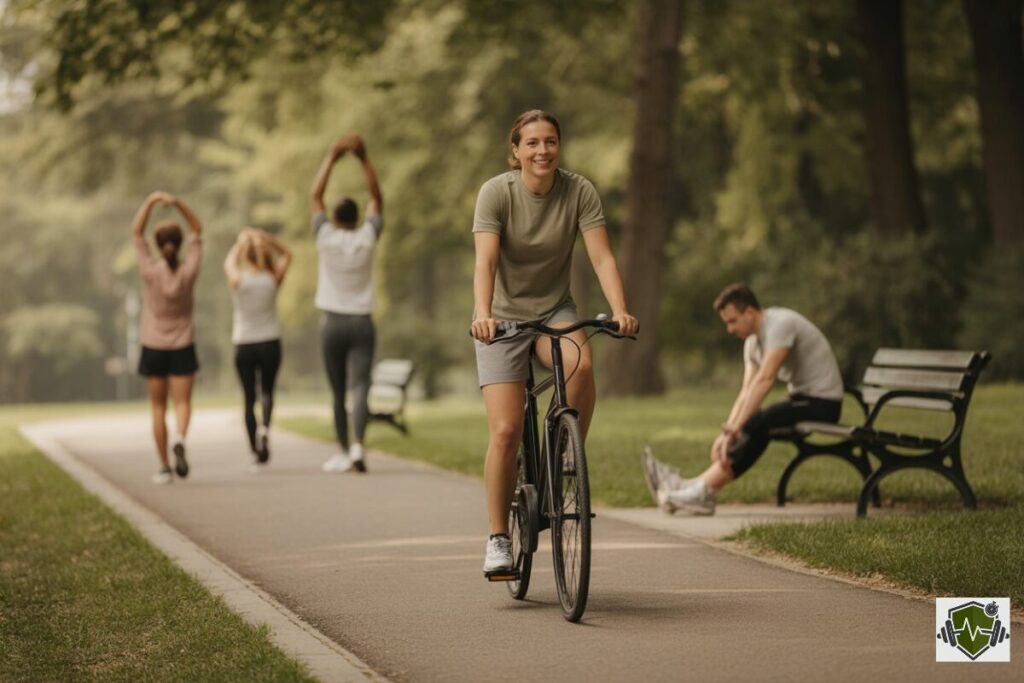
Low-Intensity Cardio
Light cardio recovery like walking or cycling supports heart health while encouraging muscle recovery workouts.
Mobility & Stretching
Mobility exercises and stretching routines help prevent muscle stiffness and improve joint range of motion.
Mind-Body Recovery Workouts
Yoga, breathing, and relaxation techniques calm the nervous system and reduce risk of injury during future workouts.
Best Active Recovery Workouts to Try
Walking or Light Jogging
Walking is one of the best low impact workouts for rest days. It keeps muscles active without causing fatigue.
Yoga or Mobility Flow
Yoga combines flexibility training and controlled breathing, making it ideal for active recovery workouts for beginners.

Swimming
Swimming is a full-body, low-impact option that supports muscle recovery while minimizing joint stress.
Cycling at Easy Pace
Easy cycling is excellent for active recovery workouts after leg day, helping loosen tight muscles.
Foam Rolling & Stretching
Foam rolling improves blood flow and supports workout recovery techniques when paired with light stretching.
Bodyweight Mobility Exercises
Simple movements like arm circles and hip openers improve mobility and support long-term training recovery methods.
Breathing & Relaxation Exercises
Deep breathing lowers stress hormones and helps your body switch fully into recovery mode.

When Should You Do Active Recovery?
During Workout Cool-Down
Using active recovery during cooldown helps gradually lower heart rate and relax muscles.
On Rest Days
Instead of total inactivity, best active recovery workouts for rest days keep the body loose and energized.
Between Heavy Training Days
Active recovery allows you to train more frequently while supporting recovery between intense sessions.
How To Make the Most Out of Active Recovery
To learn how to do active recovery properly, keep intensity low and movements smooth. You should never feel exhausted. Focus on breathing, hydration, and listening to your body. If soreness increases, scale back intensity or duration.
Precautions & Common Mistakes
Common mistakes include turning recovery into a workout, ignoring pain, or skipping recovery altogether. Remember, low intensity active recovery exercises should feel refreshing, not draining.
Final Thoughts
Active recovery workouts are one of the smartest ways to improve fitness without increasing injury risk. They help speed up muscle recovery, enhance mobility, and support long-term performance. Whether you’re new to fitness or training hard multiple days a week, active recovery is not optional—it’s essential.
By choosing the right recovery exercises for sore muscles, you’ll stay consistent, feel stronger, and continue progressing safely.

Asad Ullah is the founder and lead researcher at CombatFitnessScore.com, a resource dedicated to helping U.S. Army soldiers, ROTC cadets, and fitness enthusiasts understand and prepare for the Army Fitness Test (AFT).
With a deep interest in military fitness and physical readiness, [Author Name] has spent considerable time studying official U.S. Army regulations, FM 7-22 (Army Physical Readiness Training), and the latest AFT scoring standards published by the Department of the Army.
Every article and calculator on this site is built on official Army data — not guesswork. [Author Name] regularly updates content to reflect the latest policy changes, including the 2025 transition from the ACFT to the AFT.
What this site covers:
AFT & ACFT scoring standards by age, gender, and MOS
Training tips based on Army-approved methods
Score calculators updated with the latest 2026 data
Have a question or found an error? Reach out at [email] — accuracy is our top priority.