You can give everything to your training and still watch your APFT score slip away.
Not because you are weak.
Not because you lack discipline or commitment.
It happens because, in the first few minutes of test day, your body never truly woke up.
The army APFT warm up is often brushed aside, yet it quietly decides how your muscles fire, how your breathing settles, and how long your energy holds under pressure. Soldiers who warm up with intention do not just feel ready. They move with control. They perform with confidence.
This is not about habit or tradition. It is about physical readiness, injury prevention, and the confidence you earn when your body and mind are fully prepared.
What the Army APFT Warm Up Is Designed to Do
The army APFT warm up is not random movement or light exercise. It is a structured preparation phase that activates the body for push-ups, sit-ups, and the two-mile run.
According to Army fitness doctrine, a proper warm-up prepares:
- Muscle activation and coordination
- Joint mobility and range of motion
- Heart rate and breathing efficiency
- Mental focus under pressure
When done correctly, your body responds faster and tires slower.
That matters more than most soldiers realize.
Why Skipping the APFT Warm Up Hurts Performance
Skipping warm-ups feels harmless until it shows up mid-test.
Cold muscles produce less force. Tight hips shorten stride length. Unprepared shoulders burn out early during push-ups.
Here is what usually happens:
| No Warm-Up | Proper Warm-Up |
|---|---|
| Stiff first reps | Smooth controlled movement |
| Early fatigue | Steady endurance |
| Higher injury risk | Joint stability |
| Slower run pace | Efficient stride |
A proper army APFT warm up does not add strength.
It unlocks the strength you already trained for.
The Army’s Modern Warm-Up Philosophy
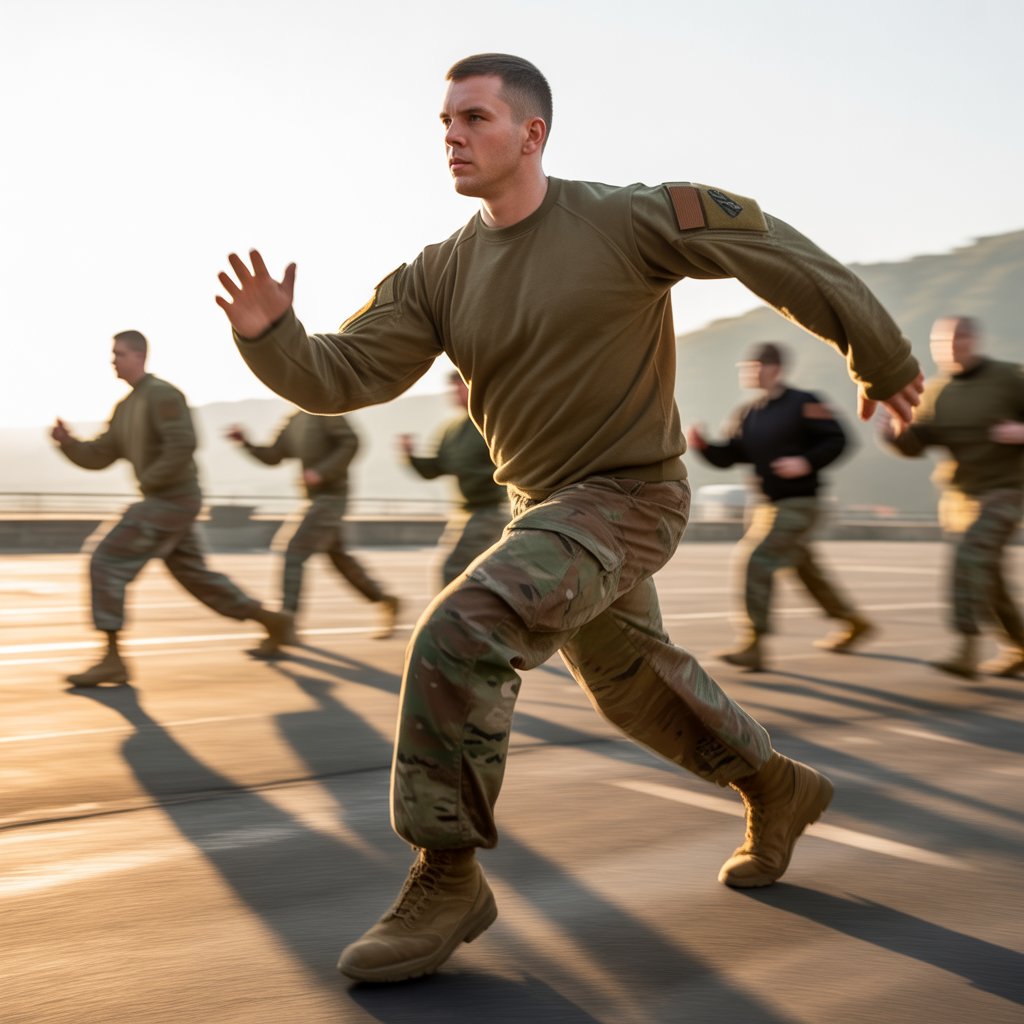
The Army no longer supports outdated warm-up habits.
Modern military fitness emphasizes dynamic movement, specific preparation, and gradual intensity.
Key Principles
- Dynamic warm-up exercises outperform static stretching
- Movement patterns should match test demands
- Warm-ups prepare, not exhaust
These principles guide every effective APFT preparation routine.
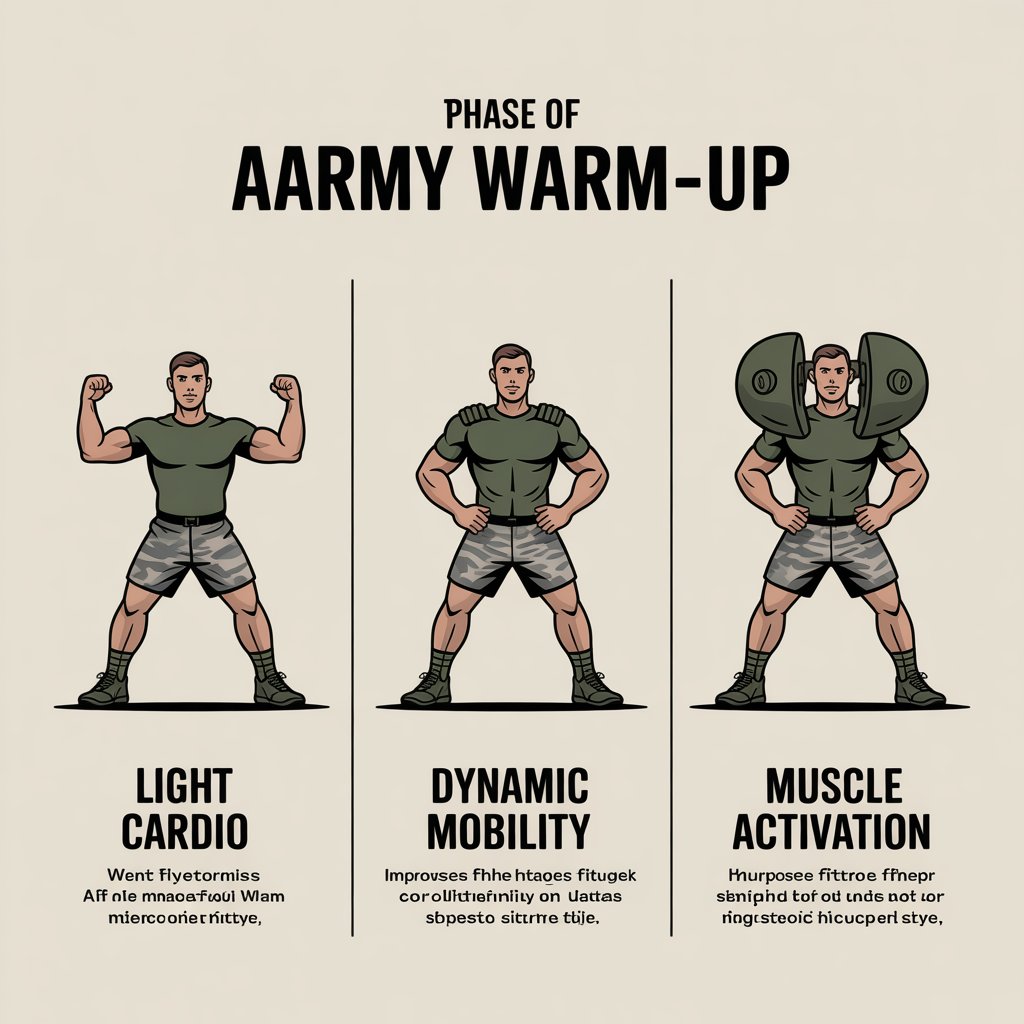
Ideal Army APFT Warm Up Structure
The most effective warm-ups last 10 to 15 minutes.
This window allows full preparation without draining energy.
| Phase | Focus | Time |
|---|---|---|
| Light cardio | Raise core temperature | 3–5 min |
| Dynamic mobility | Improve joint movement | 5–7 min |
| Muscle activation | Wake key muscles | 3–5 min |
This structure supports physical performance readiness.
Phase 1: Light Cardio to Wake the System
This phase increases blood flow and breathing efficiency.
Examples include:
- Easy jogging
- Jumping jacks
- Marching with arm swings
You should feel warm, not tired.
If breathing feels heavy, slow down.
This phase prepares the cardiovascular system for effort.
Phase 2: Dynamic Mobility for Joint Readiness
Dynamic mobility improves movement quality and reduces strain.
Focus on areas stressed during the APFT:
| Body Area | Dynamic Drill |
|---|---|
| Shoulders | Arm circles, arm swings |
| Hips | Walking lunges, hip circles |
| Spine | Torso rotations |
| Ankles | Ankle rolls, calf raises |
These drills support joint mobility, movement efficiency, and injury prevention.
Phase 3: Muscle Activation for Test Performance
Activation tells your muscles it is time to work.
Key focus areas include:
- Core strength activation
- Glute engagement
- Shoulder stability
Effective drills:
| Muscle Group | Activation Exercise |
|---|---|
| Core | Plank holds |
| Glutes | Glute bridges |
| Shoulders | Controlled push-ups |
Activation should feel controlled and confident, never rushed.
Warm-Up Adjustments for Each APFT Event
Each event stresses the body differently. Smart warm-ups reflect that.
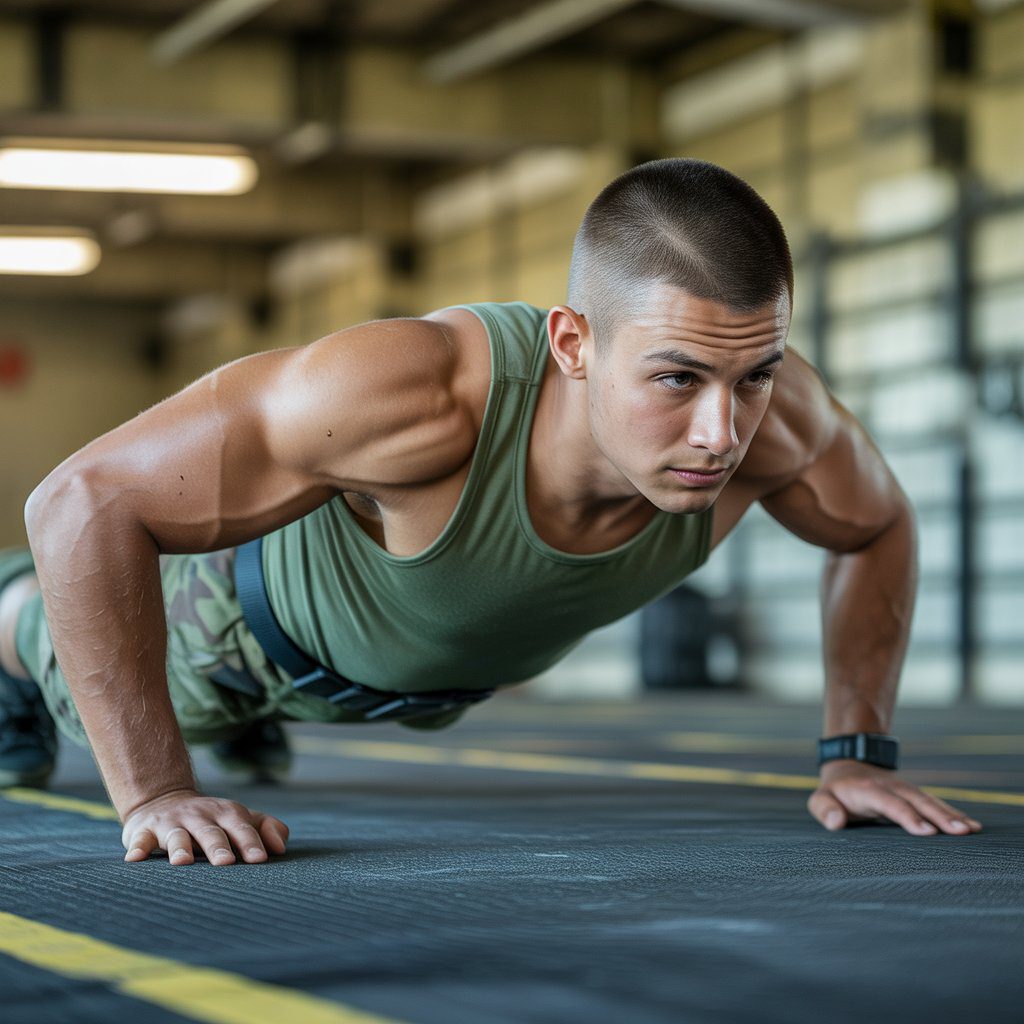
Warm Up for Push-Ups
Push-ups rely on upper body endurance, shoulder stability, and core engagement.
Helpful drills include:
- Arm swings
- Shoulder rolls
- Incline push-ups
- Short plank holds
Warm shoulders resist fatigue longer and protect joint health.
Warm Up for Sit-Ups
Sit-ups demand core endurance and hip flexor mobility.
Effective drills include:
- Knee-to-chest pulls
- Torso rotations
- Glute bridges
These movements support spinal control and reduce lower-back strain.
Warm Up for the Two-Mile Run
The run exposes tight hips and inactive glutes fast.
Add these drills:
| Drill | Performance Benefit |
|---|---|
| Walking lunges | Hip mobility |
| Leg swings | Stride length |
| Butt kicks | Hamstring activation |
| Short strides | Pace control |
A calm, prepared start almost always leads to a stronger finish.
Mental Readiness: The Hidden Benefit of Warm-Ups
The army APFT warm up also prepares the mind.
A consistent routine:
- Reduces test anxiety
- Improves focus
- Builds confidence
When your body recognizes the routine, hesitation fades. Confidence replaces doubt.
That emotional calm shows up in your breathing, posture, and pacing.

Common APFT Warm-Up Mistakes
Many soldiers sabotage themselves without realizing it.
| Mistake | Why It Hurts |
|---|---|
| Skipping warm-ups | Increases fatigue |
| Static stretching | Reduces power |
| Overdoing drills | Drains energy |
| Ignoring weak areas | Limits performance |
A warm-up should serve performance, not steal it.
How Long Should an Army APFT Warm Up Last?
For most soldiers, 10 to 15 minutes is ideal.
This duration allows:
- Proper muscle preparation
- Mental focus
- Energy conservation
Consistency matters more than complexity.
Final Thoughts: Warm Up Like Your Score Depends on It
Because it does.
The army APFT warm up is not filler. It is the bridge between training and performance. It protects your body, sharpens your movement, and steadies your nerves.
You earned your strength.
You earned your endurance.
Do not let poor preparation take it away.
Warm up with intention. Move with control. Step onto the line ready.
Your body remembers how you treat it. Make it count.

Asad Ullah is the founder and lead researcher at CombatFitnessScore.com, a resource dedicated to helping U.S. Army soldiers, ROTC cadets, and fitness enthusiasts understand and prepare for the Army Fitness Test (AFT).
With a deep interest in military fitness and physical readiness, [Author Name] has spent considerable time studying official U.S. Army regulations, FM 7-22 (Army Physical Readiness Training), and the latest AFT scoring standards published by the Department of the Army.
Every article and calculator on this site is built on official Army data — not guesswork. [Author Name] regularly updates content to reflect the latest policy changes, including the 2025 transition from the ACFT to the AFT.
What this site covers:
AFT & ACFT scoring standards by age, gender, and MOS
Training tips based on Army-approved methods
Score calculators updated with the latest 2026 data
Have a question or found an error? Reach out at [email] — accuracy is our top priority.