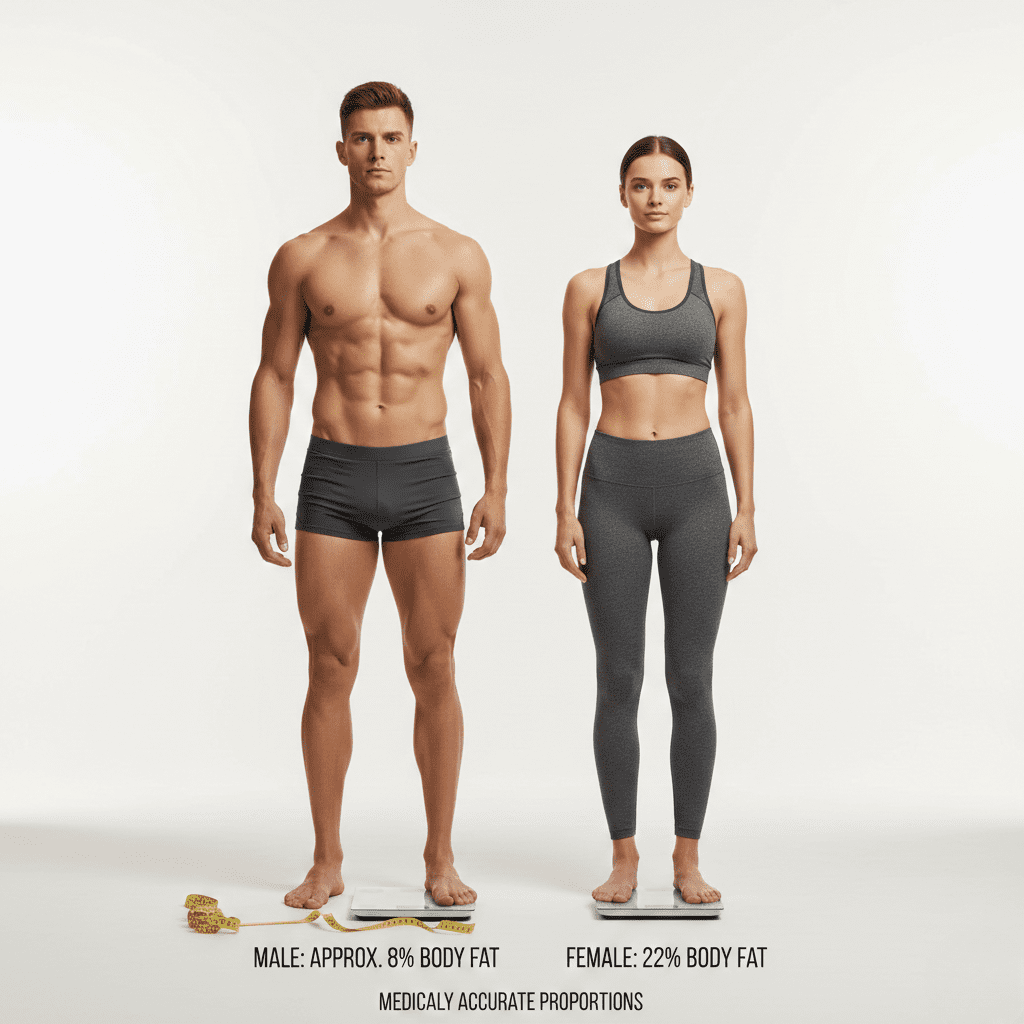
If you want to understand your fitness progress, you need more than a bathroom scale. Learning how to calculate body fat at home gives you a clearer picture of your body composition. Weight alone cannot tell you how much of your body is fat mass versus lean body mass.
The good news is that you can estimate body fat percentage at home using reliable, science-backed methods. No lab coat required. Just consistency, basic measurements, and realistic expectations.
What Is Body Fat Percentage and Why It Matters
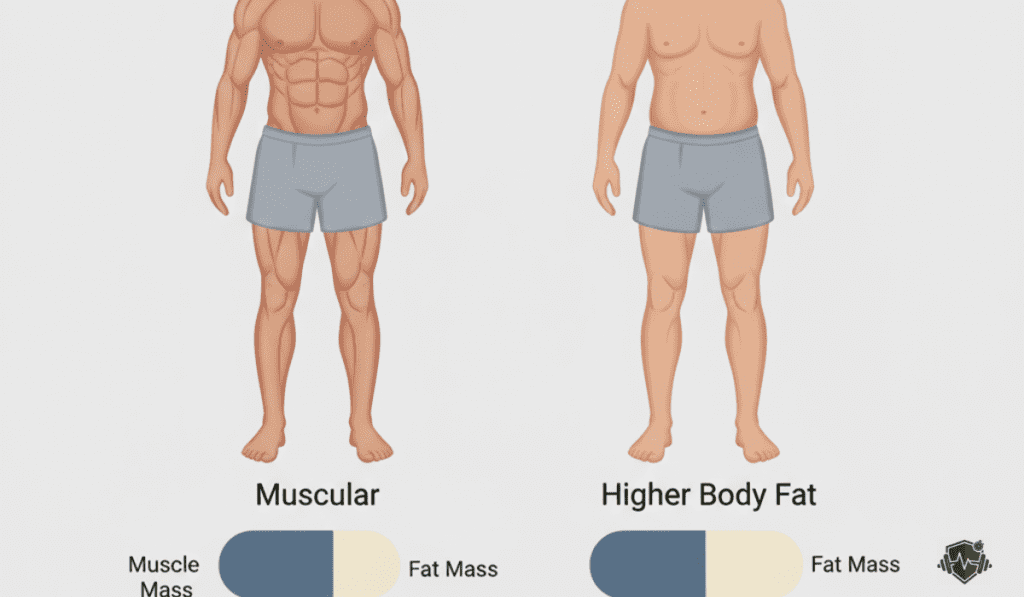
Body fat percentage shows how much of your total weight comes from fat. The rest includes muscle, bone, organs, and water. This is why two people with the same weight can look completely different.Unlike BMI, body fat percentage separates muscle mass from fat mass. BMI often mislabels muscular people as overweight and ignores fat distribution. That makes body fat a more useful metric for health, fitness progress tracking, and weight loss monitoring.
In short, body fat explains what the scale refuses to.
Can You Calculate Body Fat at Home Accurately?
Yes, you can, with some honesty about accuracy.
Home body fat calculation methods do not match medical scans exactly. However, they work well for tracking trends over time. When you measure body fat without equipment or with simple tools, consistency matters more than perfection.
For most people, home body fat testing is accurate enough to guide fitness and health decisions.
Best Body Fat Measurement Methods You Can Use at Home
Body Fat Measurement Tape Method (Manual Calculation)
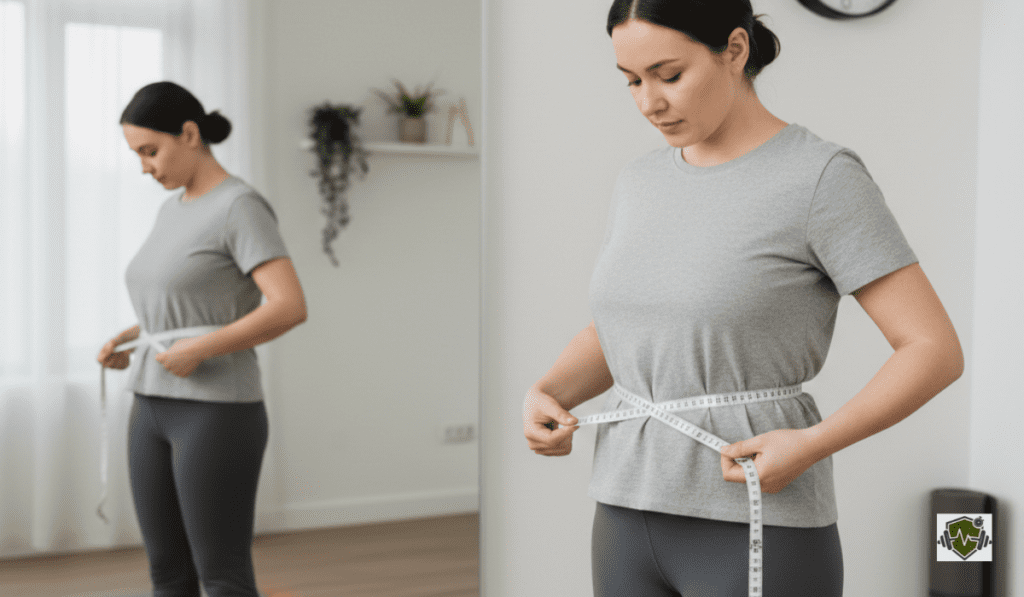
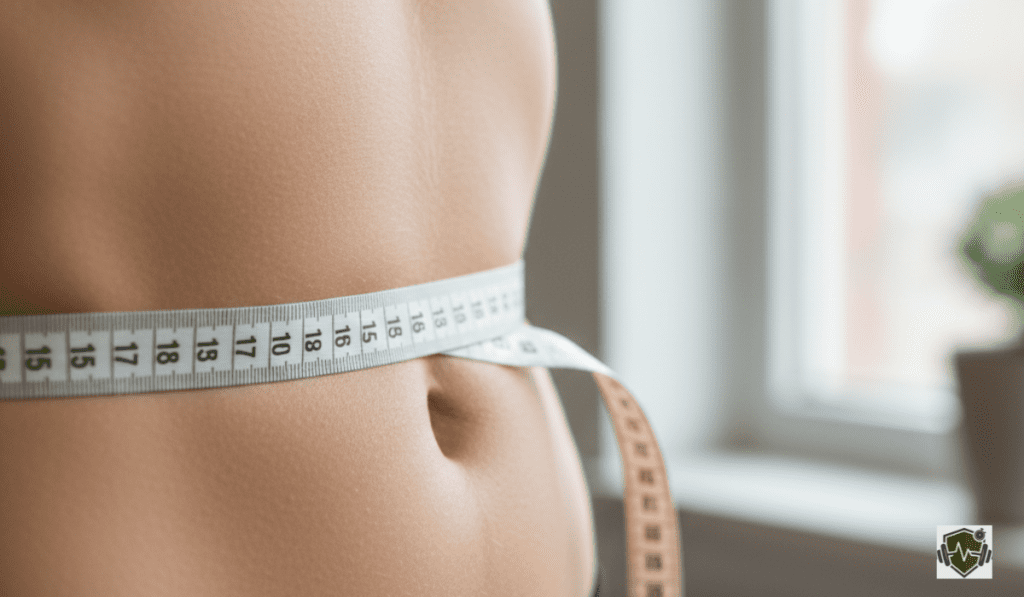
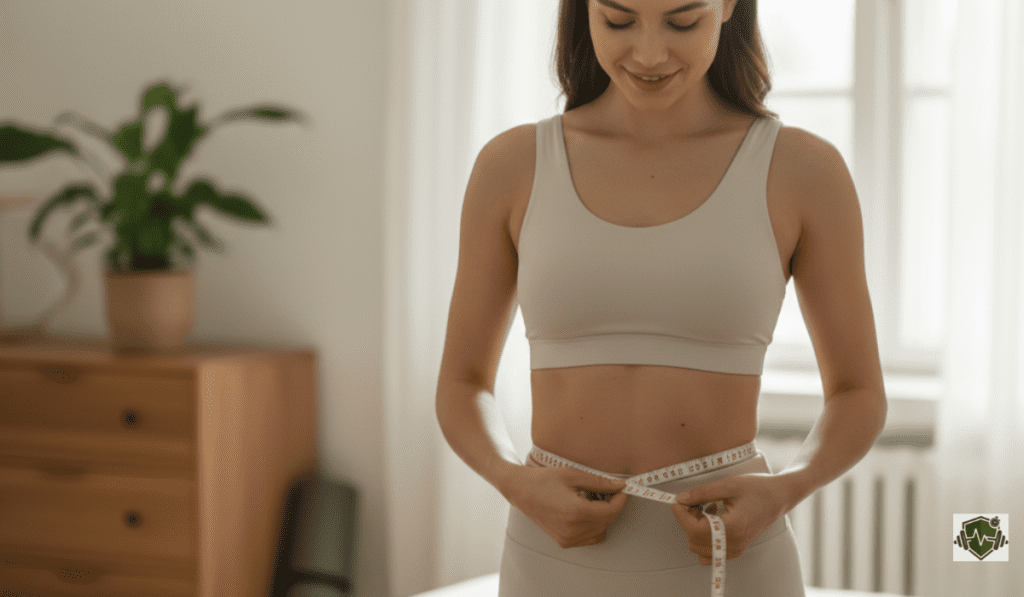
The tape method is one of the most reliable ways to measure body fat without a scale. It uses waist circumference, neck measurement, and hip measurement for women.
You only need:
- A flexible measurement tape
- A consistent measuring routine
Measure on bare skin, stand relaxed, and keep the tape snug. This method works well because fat accumulation changes body circumference in predictable ways.
This approach forms the foundation of several trusted formulas.
US Navy Body Fat Formula for Men and Women
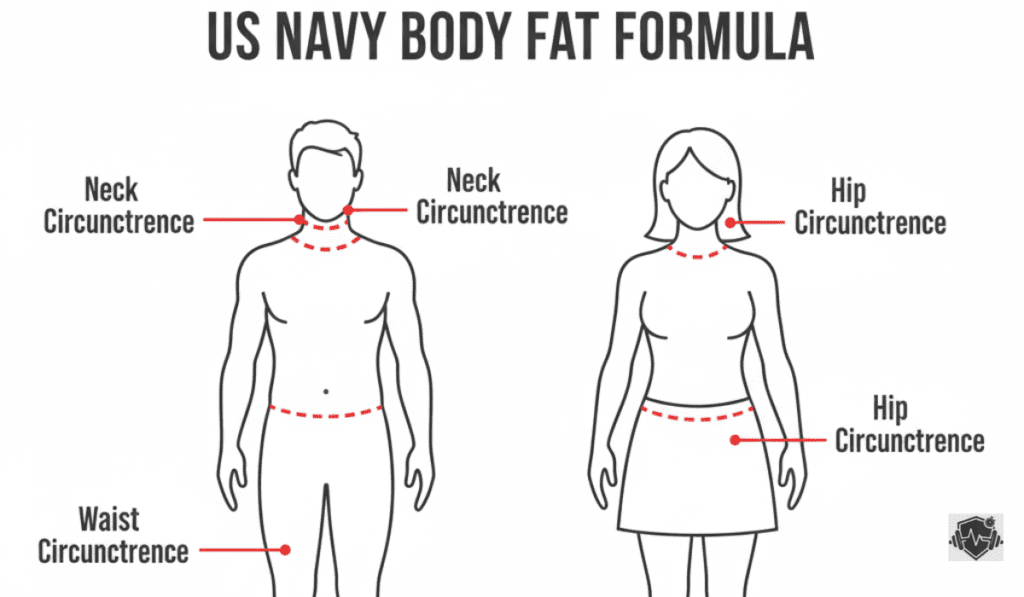
The US Navy body fat formula remains one of the most respected methods for body fat calculation at home. The military uses it because it balances accuracy and practicality.
It uses:
- Height
- Waist circumference
- Neck measurement
- Hip measurement (for women)
The logic is simple. Comparing fat-prone areas like the waist to leaner areas like the neck provides a realistic estimate of body fat percentage. Research continues to support its usefulness for home fitness assessment.
Body Fat Calculation Without Scale
You do not need a scale to estimate body fat percentage. Tape-based methods and manual formulas rely on body dimensions, not weight.
This approach helps people who:
- Avoid daily weigh-ins
- Focus on body composition at home
- Gain muscle while losing fat
If your waist shrinks but your weight stays the same, fat loss is still happening. Muscle mass vs fat mass explains the difference.
Digital Body Fat Scales (BIA Technology)
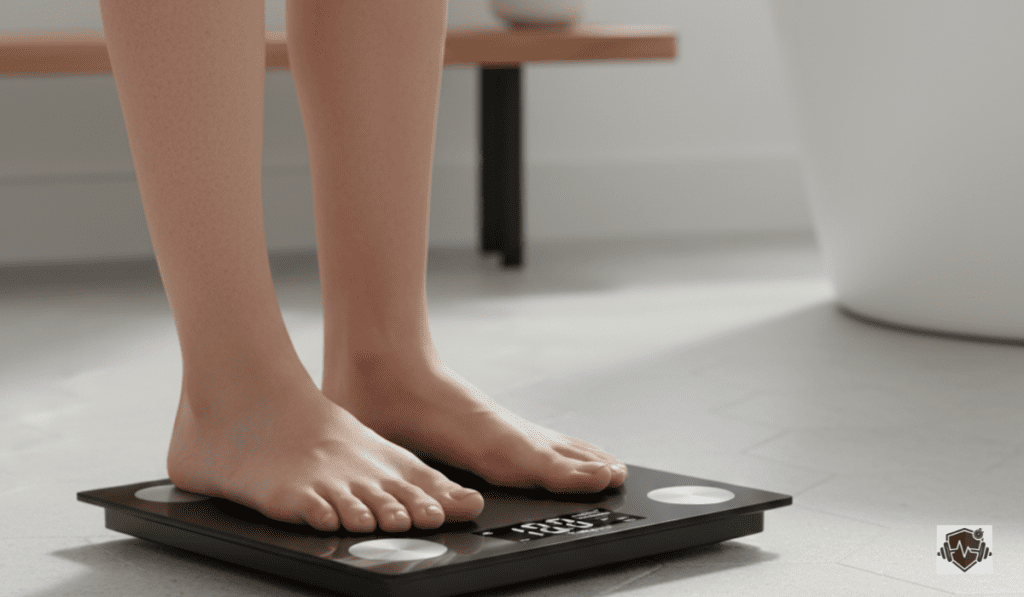
Digital body fat scales estimate body fat using bioelectrical impedance. A small electrical signal passes through the body and reacts differently to fat and lean tissue.
These scales work best when:
- Used at the same time each day
- Hydration stays consistent
- Results are tracked weekly, not daily
Daily numbers fluctuate due to water retention. Long-term trends matter more than individual readings.
Skinfold Method at Home
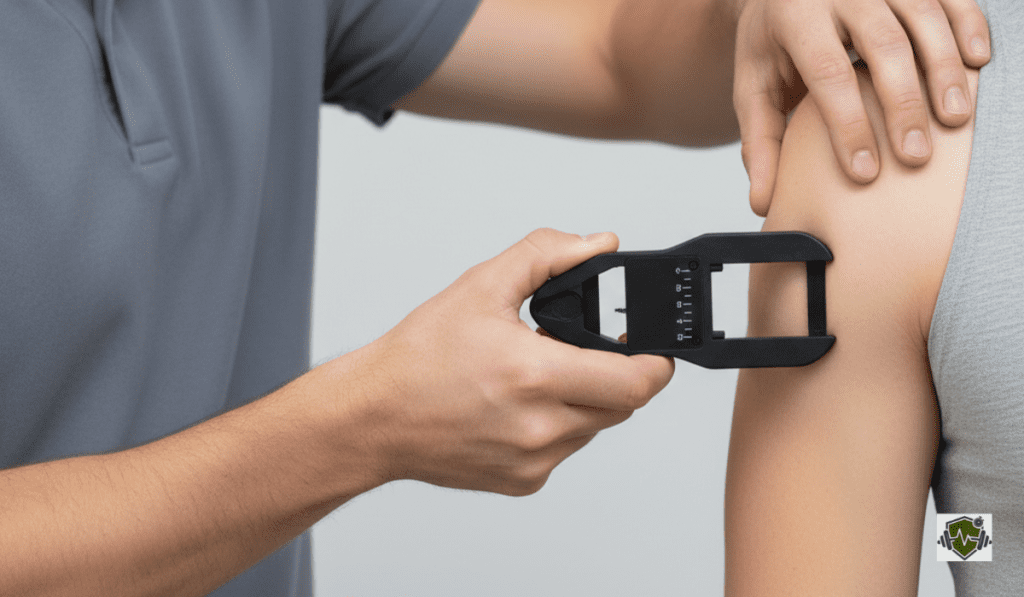
The skinfold method measures subcutaneous fat at specific body sites. When performed correctly, it can be accurate.
The challenge is consistency. Pinching the same location with the same pressure takes practice. Beginners often struggle with technique, which reduces reliability.
For most people, tape measurements offer a simpler alternative.
Accuracy of Body Fat Calculations at Home
Each method has strengths and limitations:
- Tape and Navy method: strong for trend tracking
- Digital scales: convenient but hydration-sensitive
- Skinfold method: accurate with experience
No method should be mixed randomly. Choose one, stick with it, and compare results over time. That is how accuracy improves.
Body Fat Formula Differences for Men and Women
Men and women store fat differently due to hormones and biology. Women naturally carry more essential fat, especially around the hips and thighs. Men tend to store more fat around the waist.
This is why body fat formulas for men and women differ. Comparing results without gender-specific context leads to confusion and incorrect conclusions.
Body Fat vs BMI: Why Body Fat Wins
BMI only considers height and weight. It ignores fat mass, muscle mass, and fat distribution.
Body fat percentage:
- Reflects true body composition
- Tracks fat loss more accurately
- Supports smarter fitness decisions
BMI works for population studies. Body fat works for individuals.
Healthy Body Fat Range Explained Simply
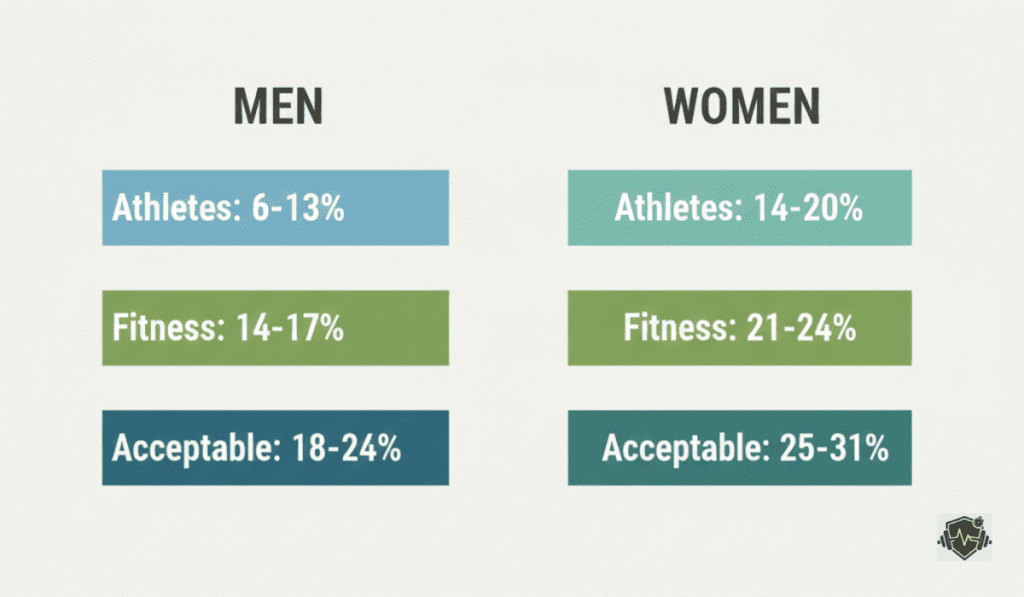
Healthy body fat ranges vary by age, sex, and activity level. Athletes sit at lower ranges. Average adults fall in the middle. Higher ranges may increase health risk.
These ranges guide understanding, not judgment. Genetics, lifestyle, and goals all matter.
Common Mistakes in Home Body Fat Measurement
People often misread progress due to:
- Measuring after meals or workouts
- Switching methods frequently
- Expecting daily changes
Body fat changes slowly. Weekly or bi-weekly tracking gives clearer results and less stress.
How to Track Body Composition at Home the Right Way
To improve accuracy:
- Measure at the same time of day
- Use the same method every time
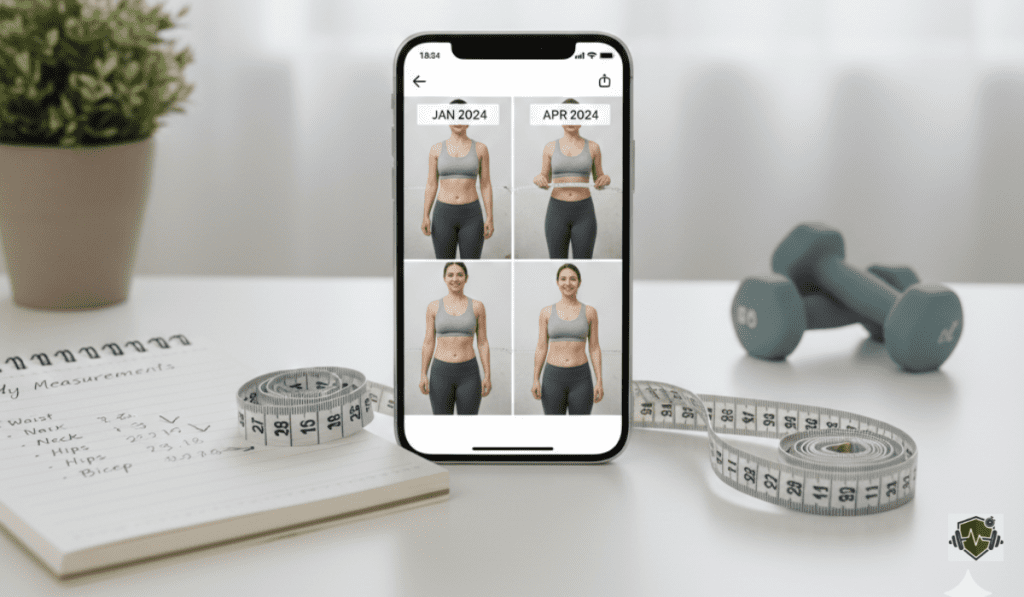
- Combine data with photos and strength performance
When measurements, photos, and energy levels improve together, progress is real.
Final Thoughts: The Best Way to Estimate Body Fat Percentage at Home
The best body fat calculator at home is the one you can use consistently. For most people, the US Navy body fat formula and measurement tape method provide the best balance of accuracy and simplicity.
Use body fat percentage as a tool, not a verdict. Numbers guide decisions. Habits drive results.

Asad Ullah is the founder and lead researcher at CombatFitnessScore.com, a resource dedicated to helping U.S. Army soldiers, ROTC cadets, and fitness enthusiasts understand and prepare for the Army Fitness Test (AFT).
With a deep interest in military fitness and physical readiness, [Author Name] has spent considerable time studying official U.S. Army regulations, FM 7-22 (Army Physical Readiness Training), and the latest AFT scoring standards published by the Department of the Army.
Every article and calculator on this site is built on official Army data — not guesswork. [Author Name] regularly updates content to reflect the latest policy changes, including the 2025 transition from the ACFT to the AFT.
What this site covers:
AFT & ACFT scoring standards by age, gender, and MOS
Training tips based on Army-approved methods
Score calculators updated with the latest 2026 data
Have a question or found an error? Reach out at [email] — accuracy is our top priority.