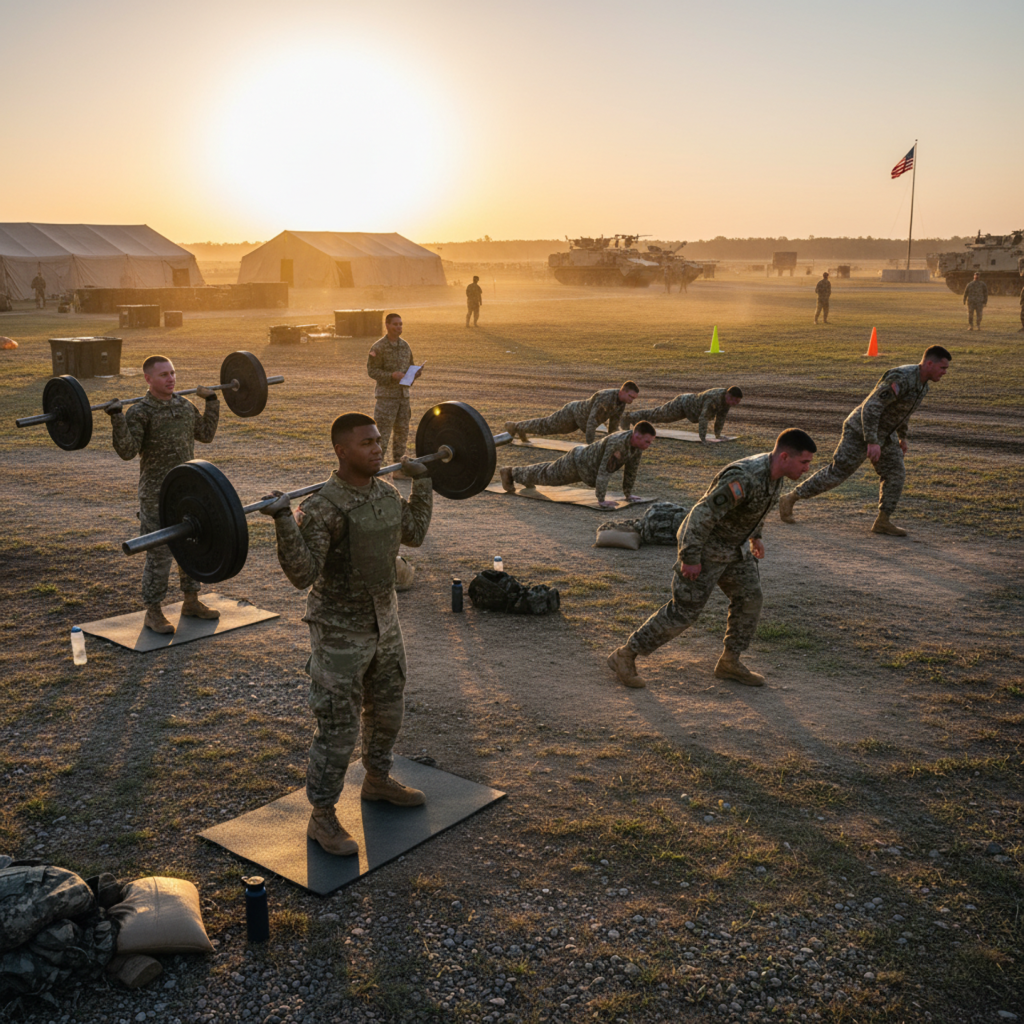
Did you max your CFT? If you’re a Marine asking that question, you already know how competitive and demanding the Combat Fitness Test (CFT) can be. Maxing it isn’t just about pride—it can impact promotions, recognition, and your overall performance profile.
In this guide, you’ll learn exactly how to know for sure if you maxed your CFT, how scoring works, and what to double-check before celebrating. Let’s break it down clearly and confidently.
What Does It Mean to Max Your CFT Score?
This section explains what “maxing” the CFT score truly means and how the scoring system works within the Marine Corps standards.
In the United States Marine Corps (USMC), maxing your CFT means earning the maximum 300 points.
The CFT consists of three events:
- Movement to Contact (MTC)
- Ammo Can Lift (ACL)
- Maneuver Under Fire (MANUF)
Each event is worth 100 points, for a total possible score of 300 points.
To officially max your CFT:
- You must achieve the maximum score in all three events
- Your times and reps must meet the top performance standards for your age and gender category
- The score must be recorded and validated through official channels
If even one event falls short of 100 points, you did not max the CFT.
CFT Events and Maximum Score Requirements Explained
Here’s a detailed look at each event and what it takes to earn 100 points in each.

Movement to Contact (MTC) Maximum Score Standards
This event measures speed and endurance over an 880-yard sprint.
To earn 100 points, you must hit the fastest time bracket for your category. Standards vary slightly based on age and gender.
Key factors:
- Explosive start
- Sprint pacing
- Strong finish
- Proper warm-up
Even being one second slower can reduce your score below 100.
Ammo Can Lift (ACL) Maximum Reps for 100 Points
The Ammo Can Lift tests upper-body muscular endurance using a 30-pound ammo can.

To max this event:
- You must perform the required number of repetitions within the 2-minute time limit.
- Form must remain strict and consistent.
Common mistakes that prevent max scores:
- Lockout issues
- Incomplete reps
- Poor pacing
One invalid rep can cost you valuable points.
Maneuver Under Fire (MANUF) Perfect Score Criteria
This is the most physically demanding CFT event.
It includes:
- Crawling
- Ammo resupply
- Casualty drag
- Grenade throw
- Sprinting
To earn 100 points:
- You must complete the course within the fastest qualifying time.
- Technique and transitions matter significantly.
Small inefficiencies can drop you below a perfect score.
How to Calculate If You Truly Maxed Your CFT
Now let’s make sure you calculate your CFT score correctly and avoid confusion.
Follow these steps:
Step 1: Verify Official Score Sheets
Always confirm your results on:
- Your official Marine Corps fitness report
- Your unit’s validated CFT score sheet
- Marine Online (MOL) system
Unofficial stopwatch estimates do not count.
Step 2: Confirm 100 Points Per Event
Check each event individually:
| CFT Event | Points Earned | Maxed? |
|---|---|---|
| Movement to Contact | 100 | Yes/No |
| Ammo Can Lift | 100 | Yes/No |
| Maneuver Under Fire | 100 | Yes/No |
All three must show 100 points.
Step 3: Add Total Score
Add all three event scores.
- 300 = You maxed your CFT
- 299 or below = Not a full max
There is no rounding up.
Why Maxing the Marine Corps CFT Matters for Your Career
Maxing your CFT is more than bragging rights.
It can positively impact:
- Promotion competitiveness
- Composite score
- Command evaluations
- Leadership perception
- Professional military education opportunities
In competitive MOS fields, a 300 CFT score can separate you from peers.
It signals:
- Elite physical readiness
- Discipline
- Combat effectiveness
- Commitment to standards
In high-performance environments, details matter.
Common Reasons Marines Think They Maxed But Didn’t
Many Marines believe they maxed their CFT but later discover they were a few points short.
Here’s why that happens:
Misreading Age-Based Standards
Standards shift depending on:
- Age group
- Gender
A time that was 100 points last year may not apply now.
Always verify the current official standards.
Assuming Close Is Good Enough
A 99-point event still means you did not max.
There is no partial max.
Counting Reps Incorrectly in ACL
Improper lockouts or questionable reps may be disqualified.
Always wait for official confirmation.
Manual Calculation Errors
Adding scores incorrectly is common under stress.
Double-check totals before celebrating.
How to Improve If You Missed a 300 CFT Score
If you scored 285–299, you’re close. Small adjustments can push you to 300 next time.
Focus on targeted improvements.
Boosting Movement to Contact Speed
Improve sprint performance by:
- Interval training
- Hill sprints
- Leg strength training
- Anaerobic conditioning
Explosiveness is key.
Increasing Ammo Can Lift Repetitions
To add more reps:
- Train shoulder endurance
- Strengthen triceps and upper back
- Practice strict form under fatigue
- Use timed sets
Consistency beats random workouts.
Shaving Seconds Off Maneuver Under Fire
Train transitions.
Work on:
- Efficient crawling technique
- Strong grip for casualty drag
- Controlled breathing
- Tactical pacing
Practice the full event simulation regularly.
Mental Edge: The Psychology of Maxing Your CFT
Physical performance matters—but mindset separates 290 from 300.
Top performers:
- Visualize each event
- Rehearse transitions mentally
- Stay calm under fatigue
- Push through discomfort strategically
Confidence under pressure can improve performance by seconds.
Seconds determine max scores.
Official Verification: When Can You Say You Maxed Your CFT?
You can confidently say you maxed your CFT when:
- You scored 100 in all three events
- Your official total shows 300
- Your command validated the results
- The score is recorded in official Marine Corps systems
Until then, it’s only unofficial.

Asad Ullah is the founder and lead researcher at CombatFitnessScore.com, a resource dedicated to helping U.S. Army soldiers, ROTC cadets, and fitness enthusiasts understand and prepare for the Army Fitness Test (AFT).
With a deep interest in military fitness and physical readiness, [Author Name] has spent considerable time studying official U.S. Army regulations, FM 7-22 (Army Physical Readiness Training), and the latest AFT scoring standards published by the Department of the Army.
Every article and calculator on this site is built on official Army data — not guesswork. [Author Name] regularly updates content to reflect the latest policy changes, including the 2025 transition from the ACFT to the AFT.
What this site covers:
AFT & ACFT scoring standards by age, gender, and MOS
Training tips based on Army-approved methods
Score calculators updated with the latest 2026 data
Have a question or found an error? Reach out at [email] — accuracy is our top priority.